The Second Part of the First Lesson for Learning German and Using It to Introduce Yourself and Your Profession for Pashto Speakers
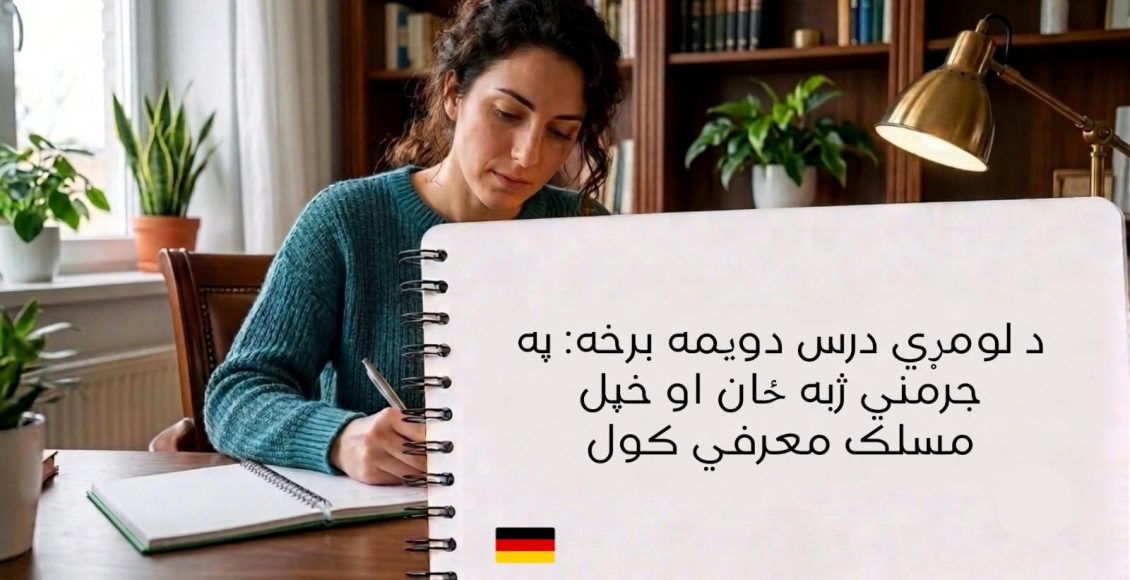
The Second Part of the First Lesson for Learning German and Using It to Introduce Yourself and Your Profession for Pashto Speakers
We continue together the journey of developing your level in the German language through this complementary part of the greeting and introduction lesson, in which we move to a deeper and more detailed stage in building daily conversations. This lesson aims to give you the basic linguistic tools that enable you to break the barrier of fear and start a real and effective introduction in a smooth and direct style that suits various life and social situations.
This part focuses on mastering German learning skills related to introducing yourself accurately, speaking with confidence about your origins, nationality, and the country you aspire to visit, in addition to explaining the nature of your work or field of study. These expressions and vocabulary are essential and indispensable for everyone preparing to travel abroad for movement and settlement, or planning to study abroad and communicate with multicultural academic environments.
This lesson includes a new set of common and most used expressions in personal introduction conversations in German, which vary between basic questions and their typical answers. Each phrase has been supported with a direct audio listening feature to ensure training on correct pronunciation from its source, and to acquire sound articulation that gives you full confidence while speaking with others in German.
This is another important step in your German learning course. To ask about current residence, we say ‘Wo wohnst du?‘. Listen to its clear spelling and pronunciation.
🏙️ Wo wohnst du?
چیرته اوسیږې؟
This is another important step in your German learning course. To tell your place of residence, we say ‘Ich wohne in Berlin‘. Listen to its clear spelling and pronunciation.
🏠 Ich wohne in Berlin.
زه په برلین کې اوسم.
This is another important step in your German learning course. To ask about age, we say ‘Wie alt bist du?‘. Listen to its clear spelling and pronunciation.
🎂 Wie alt bist du?
څو کاله عمر لري؟
This is another important step in your German learning course. To state your age, we say ‘Ich bin fünfundzwanzig Jahre alt‘. Listen to its clear spelling and pronunciation.
🎈 Ich bin fünfundzwanzig Jahre alt.
زه پنځه ویشت کاله عمر لرم.
This is another important step in your German learning course. To ask about profession or field of work, we say ‘Was machst du beruflich?‘. Listen to its clear spelling and pronunciation.
💼 Was machst du beruflich?
څه کار کوې؟
This is another important step in your German learning course. To answer about your field of work, we say ‘Ich arbeite in einer Firma‘. Listen to its clear spelling and pronunciation.
👨💻 Ich arbeite in einer Firma.
زه په یوه شرکت کې کار کوم.
This is another important step in your German learning course. To check on someone’s well-being, we say ‘Wie geht es dir?‘. Listen to its clear spelling and pronunciation.
🙂 Wie geht es dir?
څنګه یې؟
This is another important step in your German learning course. To answer positively about your well-being, we say ‘Mir geht es gut, danke‘. Listen to its clear spelling and pronunciation.
👍 Mir geht es gut, danke.
زه ښه یم، مننه.
This is another important step in your German learning course. To say goodbye when you expect to meet again soon, we say ‘Bis später‘. Listen to its clear spelling and pronunciation.
👋 Bis später.
وروسته به وګورو.
This is another important step in your German learning course. To say a formal goodbye, we say ‘Auf Wiedersehen!‘. Listen to its clear spelling and pronunciation.
🚶 Auf Wiedersehen!
خدای پامان!
This lesson is for learning the German language. It contains ten short clips that teach you how to introduce yourself, talk about your residence, age, and profession, and end a conversation politely in German from the very first moment.
“Wo wohnst du?” is the question used to ask about current residence. It helps you know where the person lives and opens the door to deeper conversation.
“Ich wohne in Berlin” is the natural answer to tell your place of residence. It is one of the most common answers in daily conversations.
“Wie alt bist du?” asks about age. Knowing how to ask and answer it makes your conversation more personal and natural.
“Ich bin fünfundzwanzig Jahre alt” tells your age. It is an essential expression for introducing yourself fully.
“Was machst du beruflich?” asks about profession or field of work. It moves the conversation from personal information to professional life.
“Ich arbeite in einer Firma” answers about the field of work. It is a common and useful expression in work and social contexts.
“Wie geht es dir?” checks on someone’s well-being. It adds a friendly and caring touch to your conversation.
“Mir geht es gut, danke” is the positive response to the well-being question. It shows you can respond naturally, not just ask.
“Bis später” is used to say goodbye when you expect to meet again soon. It is light and friendly.
“Auf Wiedersehen!” is the formal goodbye. Together with “Bis später”, it completes your ability to end any conversation politely.
Together, these ten phrases form a complete beginner’s toolkit for introducing yourself, talking about your residence, age, and profession, and ending a conversation politely in German.