The Third Lesson for Learning German and Using It for Getting Around by Metro and Public Transport for Persian Speakers
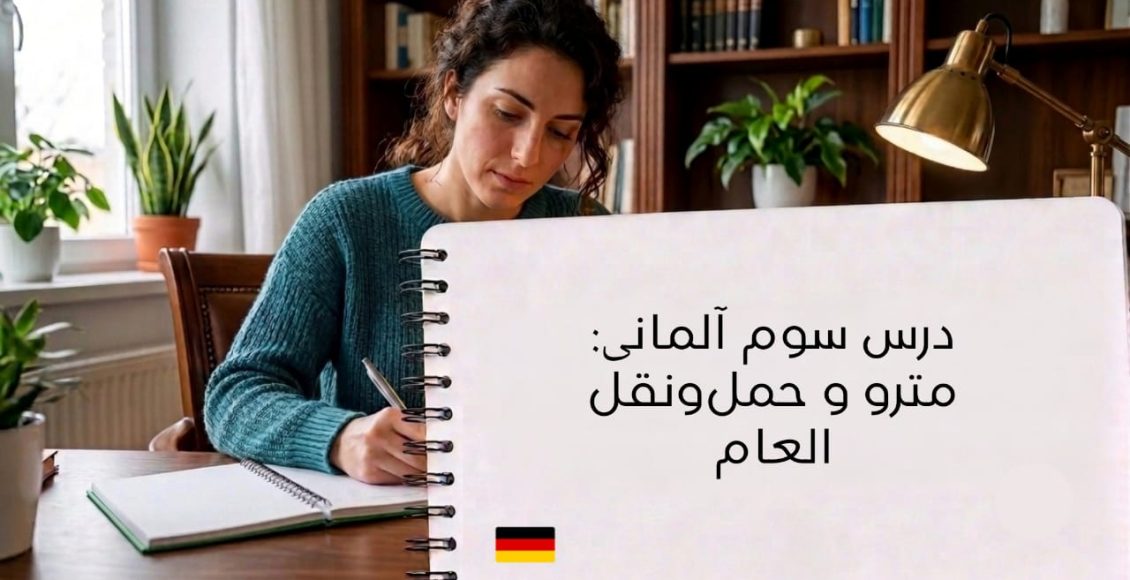
The Third Lesson for Learning German and Using It for Getting Around by Metro and Public Transport for Persian Speakers
We continue together the journey of developing your level in learning German through this lesson dedicated to the metro and public transport, in which we move from simple communication situations to the skills of getting around and moving easily in your daily life. This lesson aims to give you the precise tools and phrases in German that enable you to buy tickets, ask for directions, and deal with train stations and various means of transport with confidence and without hesitation.
This part focuses on mastering the skills of inquiring about routes, understanding audio and written instructions and guidance, and the ability to ask for help or directions at the right times. These expressions and vocabulary are essential and indispensable for every traveler or resident seeking to move independently and easily within German-speaking cities, or for those wishing to enhance their daily communication effectively.
This lesson includes a new set of the most used practical terms and expressions in metro stations and public transport, which vary between travelers’ questions and station staff’s answers. Each phrase has been supported with a direct audio listening feature to ensure training on correct pronunciation and the clear tone that gives you full confidence during your movement.
This is another important step in your German learning course. To ask where to buy travel or boarding tickets, we say ‘Wo kann ich eine Fahrkarte kaufen?‘. Listen to its clear spelling and pronunciation.
🚇 Wo kann ich eine Fahrkarte kaufen?
کجا میتوانم بلیت بخرم؟
This is another important step in your German learning course. To request a one-way ticket to a specific destination, we say ‘Ich hätte gern eine einfache Fahrkarte in die Innenstadt, bitte‘. Listen to its clear spelling and pronunciation.
🎫 Ich hätte gern eine einfache Fahrkarte in die Innenstadt, bitte.
لطفاً یک بلیت یکطرفه به مرکز شهر میخواستم.
This is another important step in your German learning course. To ask about the price of a round-trip ticket, we say ‘Was kostet eine Rückfahrkarte?‘. Listen to its clear spelling and pronunciation.
💵 Was kostet eine Rückfahrkarte?
بلیت رفتوبرگشت چند است؟
This is another important step in your German learning course. To inquire about the departure platform of the appropriate train, we say ‘Von welchem Gleis fährt der Zug ab?‘. Listen to its clear spelling and pronunciation.
🚉 Von welchem Gleis fährt der Zug ab?
قطار از کدام سکو حرکت میکند؟
This is another important step in your German learning course. To confirm you are boarding the correct train to your destination, we say ‘Ist das der richtige Zug zum Flughafen?‘. Listen to its clear spelling and pronunciation.
🚆 Ist das der richtige Zug zum Flughafen?
آیا این قطار درست به فرودگاه است؟
This is another important step in your German learning course. To ask about the transfer station (line change), we say ‘Wo muss ich umsteigen?‘. Listen to its clear spelling and pronunciation.
🔄 Wo muss ich umsteigen?
کجا باید خط عوض کنم؟
This is another important step in your German learning course. To find out the number of remaining stations to your destination, we say ‘Wie viele Haltestellen sind es bis zum Hauptbahnhof?‘. Listen to its clear spelling and pronunciation.
🔢 Wie viele Haltestellen sind es bis zum Hauptbahnhof?
تا ایستگاه مرکزی چند ایستگاه مانده است؟
This is another important step in your German learning course. To politely inquire about occupied seats, we say ‘Entschuldigung, ist dieser Platz besetzt?‘. Listen to its clear spelling and pronunciation.
💺 Entschuldigung, ist dieser Platz besetzt?
ببخشید، آیا این صندلی اشغال است؟
This is another important step in your German learning course. To ask for help when you feel lost, we say ‘Entschuldigung, können Sie mir helfen? Ich habe mich verlaufen‘. Listen to its clear spelling and pronunciation.
❓ Entschuldigung, können Sie mir helfen? Ich habe mich verlaufen.
ببخشید، میتوانید به من کمک کنید؟ من راهم را گم کردهام.
This is another important step in your German learning course. To look for the nearest exit in the station, we say ‘Wo ist der nächste Ausgang?‘. Listen to its clear spelling and pronunciation.
🚪 Wo ist der nächste Ausgang?
نزدیکترین خروجی کجاست؟
دانش خود را محک بزنید
سطح خود را برای کلمات و عباراتی که آموختهایم ارزیابی کنید
This lesson is for learning the German language. It contains ten short clips that teach you how to buy tickets, ask about platforms and transfers, find exits, and move confidently in metro stations and public transport in German from the very first moment.
"Wo kann ich eine Fahrkarte kaufen?" asks where to buy travel tickets. It is the first step in any journey.
"Ich hätte gern eine einfache Fahrkarte in die Innenstadt, bitte" requests a one-way ticket to a specific destination. It shows you can make clear travel requests politely.
"Was kostet eine Rückfahrkarte?" asks about the price of a round-trip ticket. It helps you plan your travel budget.
"Von welchem Gleis fährt der Zug ab?" asks about the departure platform of the train. It prevents you from missing your train.
"Ist das der richtige Zug zum Flughafen?" confirms you are boarding the correct train. It saves you from taking the wrong route.
"Wo muss ich umsteigen?" asks about the transfer station. It is essential when your route requires changing lines.
"Wie viele Haltestellen sind es bis zum Hauptbahnhof?" asks about the remaining number of stations. It helps you know when to get off.
"Entschuldigung, ist dieser Platz besetzt?" politely asks if a seat is taken. It shows good manners in public transport.
"Entschuldigung, können Sie mir helfen? Ich habe mich verlaufen" asks for help when you feel lost. It is useful in unfamiliar stations.
"Wo ist der nächste Ausgang?" asks about the nearest exit. Together with all the previous phrases, it completes your ability to navigate any station confidently.
Together, these ten phrases form a complete beginner's toolkit for buying tickets, asking about platforms and transfers, and moving confidently in metro stations and public transport in German.