The Second Part of the Third Lesson for Learning German and Using It for Getting Around by Metro and Public Transport for Albanian Speakers
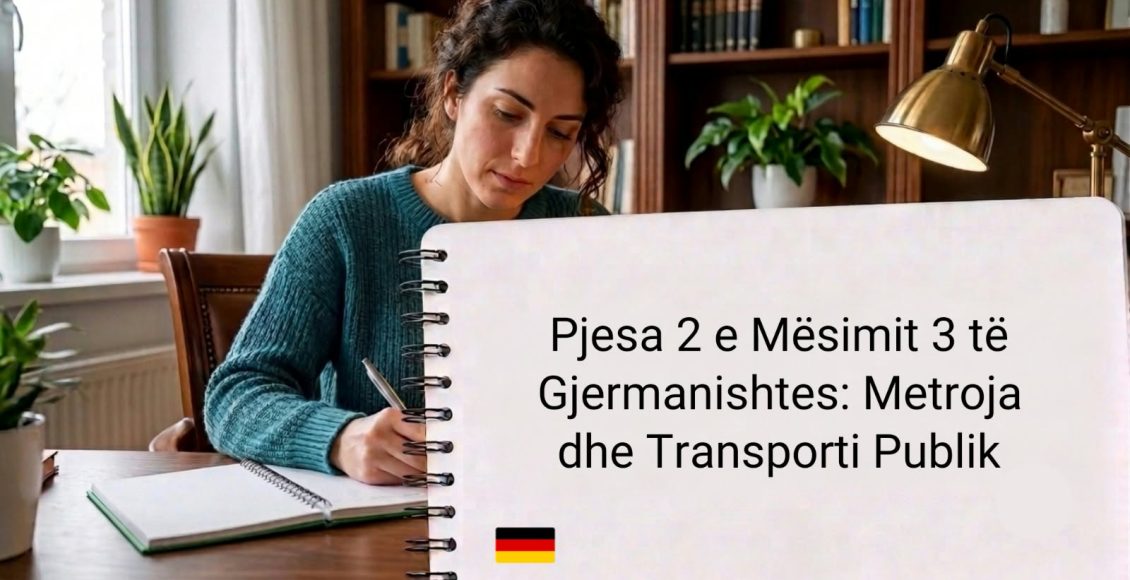
The Second Part of the Third Lesson for Learning German and Using It for Getting Around by Metro and Public Transport for Albanian Speakers
We continue together in this second part of the third lesson to complete the journey of learning German for the metro and public transport, to move one more step towards mastering the skills of getting around and moving easily in your daily life. This part aims to give you more precise tools and phrases in German that enable you to buy tickets, ask for directions, and deal with train stations and various means of transport with confidence and without hesitation.
This part focuses on mastering the skills of inquiring about routes, understanding audio and written instructions and guidance, and the ability to ask for help or directions at the right times. These expressions and vocabulary are essential and indispensable for every traveler or resident seeking to move independently and easily within German-speaking cities, or for those wishing to enhance their daily communication effectively.
This lesson includes a new set of the most used practical terms and expressions in metro stations and public transport, which vary between travelers’ questions and station staff’s answers. Each phrase has been supported with a direct audio listening feature to ensure training on correct pronunciation and the clear tone that gives you full confidence during your movement.
This is another important step in your German learning course. To ask about the right line to reach your destination, we say ‘Welche Linie muss ich zum Museum nehmen?‘. Listen to its clear spelling and pronunciation.
🗺️ Welche Linie muss ich zum Museum nehmen?
Cilën linjë duhet të marr për në muze?
This is another important step in your German learning course. To give the famous warning about the gap between the train and the platform, we say ‘Vorsicht, Lücke zwischen Zug und Bahnsteig‘. Listen to its clear spelling and pronunciation.
⚠️ Vorsicht, Lücke zwischen Zug und Bahnsteig.
Kujdes, hendeku midis trenit dhe platformës.
This is another important step in your German learning course. To inquire whether train service is running on time today, we say ‘Fährt der Zug heute pünktlich?‘. Listen to its clear spelling and pronunciation.
⏱️ Fährt der Zug heute pünktlich?
A është treni në orar sot?
This is another important step in your German learning course. To announce that the train is delayed for a certain time, we say ‘Der Zug hat zehn Minuten Verspätung‘. Listen to its clear spelling and pronunciation.
⏳ Der Zug hat zehn Minuten Verspätung.
Treni ka dhjetë minuta vonesë.
This is another important step in your German learning course. To ask if there is an elevator or escalator nearby, we say ‘Gibt es hier in der Nähe einen Aufzug oder eine Rolltreppe?‘. Listen to its clear spelling and pronunciation.
🛗 Gibt es hier in der Nähe einen Aufzug oder eine Rolltreppe?
A ka ashensor ose shkallë lëvizëse afër këtu?
This is another important step in your German learning course. To inquire about the departure time of the last train, we say ‘Wann fährt der letzte Zug?‘. Listen to its clear spelling and pronunciation.
🌙 Wann fährt der letzte Zug?
Kur niset treni i fundit?
This is another important step in your German learning course. To report the loss of a bag or item on the train, we say ‘Ich habe meine Tasche im Zug verloren. Wo ist das Fundbüro?‘. Listen to its clear spelling and pronunciation.
👜 Ich habe meine Tasche im Zug verloren. Wo ist das Fundbüro?
Kam humbur çantën në tren. Ku është zyra e gjërave të humbura?
This is another important step in your German learning course. To ask about the availability of monthly tickets or subscription cards, we say ‘Verkaufen Sie Monatskarten?‘. Listen to its clear spelling and pronunciation.
💳 Verkaufen Sie Monatskarten?
A shisni abonime mujore?
This is another important step in your German learning course. To ask about the name of the current station, we say ‘Wie heißt diese Haltestelle?‘. Listen to its clear spelling and pronunciation.
📍 Wie heißt diese Haltestelle?
Si quhet kjo ndalesë?
This is another important step in your German learning course. To inform someone that your next station is approaching, we say ‘Die nächste Station ist meine Haltestelle‘. Listen to its clear spelling and pronunciation.
🛑 Die nächste Station ist meine Haltestelle.
Ndalesa e radhës është ndalesa ime.
Testoni njohuritë tuaja
Vlerësoni nivelin tuaj për fjalët dhe shprehjet që kemi mësuar
This lesson is for learning the German language. It contains ten short clips that teach you how to ask about lines and delays, report lost items, inquire about elevators and monthly tickets, and know your station in German from the very first moment.
"Welche Linie muss ich zum Museum nehmen?" asks about the right line to reach your destination. It is essential for navigating the metro network.
"Vorsicht, Lücke zwischen Zug und Bahnsteig" is the famous warning about the gap between the train and the platform. It shows you understand safety announcements.
"Fährt der Zug heute pünktlich?" inquires whether train service is running on time today. It helps you plan your journey.
"Der Zug hat zehn Minuten Verspätung" announces that the train is delayed. It is a common phrase in station announcements.
"Gibt es hier in der Nähe einen Aufzug oder eine Rolltreppe?" asks about elevators or escalators nearby. It is useful for accessibility and luggage.
"Wann fährt der letzte Zug?" asks about the departure time of the last train. It prevents you from being stranded late at night.
"Ich habe meine Tasche im Zug verloren. Wo ist das Fundbüro?" reports a lost bag or item on the train. It helps you recover your belongings.
"Verkaufen Sie Monatskarten?" asks about monthly tickets or subscriptions. It saves you money on regular travel.
"Wie heißt diese Haltestelle?" asks the name of the current station. It helps you know exactly where you are.
"Die nächste Station ist meine Haltestelle" informs someone that your next station is approaching. Together with the previous phrases, it completes your ability to navigate any metro journey confidently.
Together, these ten phrases form a complete beginner's toolkit for asking about lines and delays, reporting lost items, and getting around confidently in metro stations and public transport in German.